 By Bemi Brooks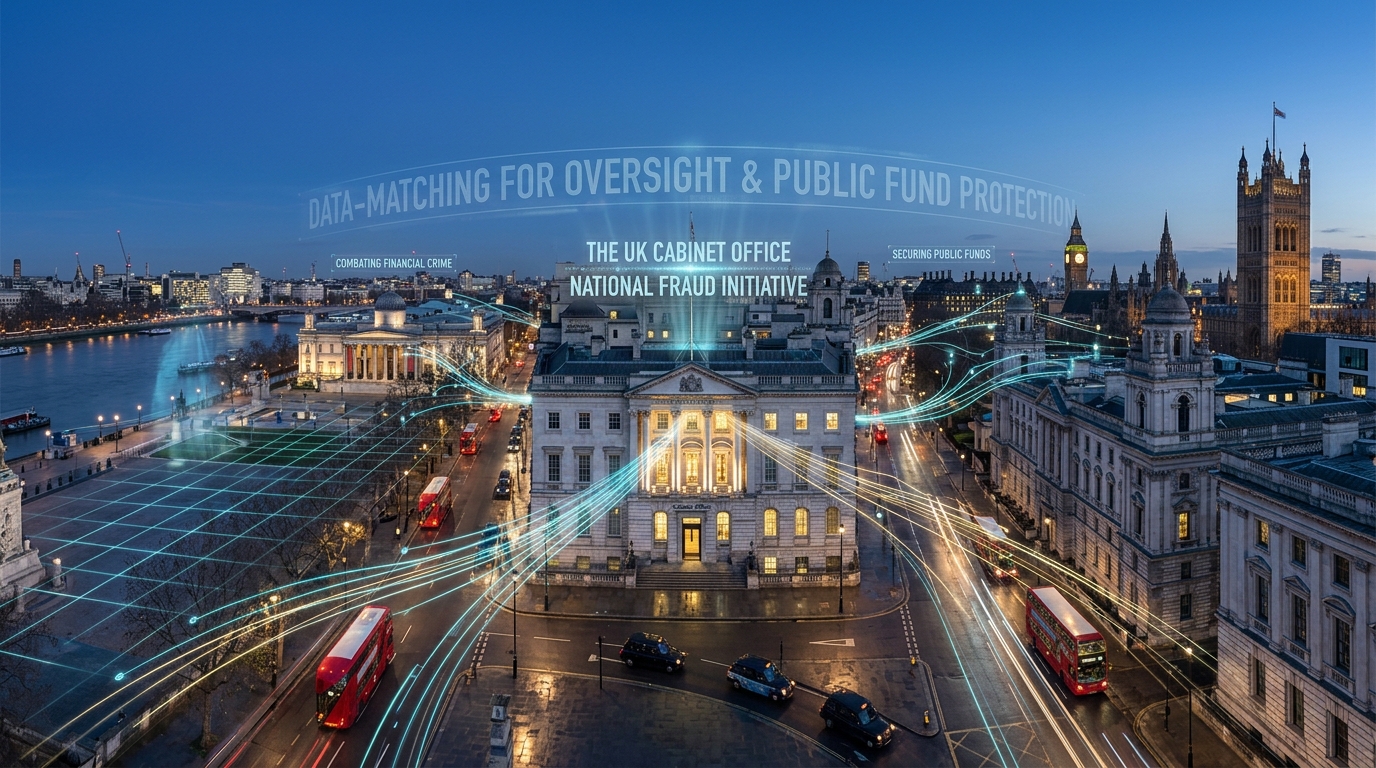
The national fraud initiative represents a cornerstone of the United Kingdom’s data-driven approach to combating fraud against public funds. Operated by the Public Sector Fraud Authority within the Cabinet Office, this statutory data-matching exercise systematically compares electronic records across more than 1,100 public and private sector organisations. By identifying inconsistencies that signal potential fraud or error, the national fraud initiative helps protect taxpayer money and supports the integrity of public services.
In an era when fraud constitutes a significant portion of recorded crime, the initiative delivers measurable outcomes. Recent exercises have prevented or recovered hundreds of millions of pounds, contributing to cumulative savings exceeding £2.9 billion since its inception in 1996. This article examines the legal framework, operational mechanisms, recent developments, and forward-looking implications of the national fraud initiative within the wider landscape of financial crime prevention.
Background and Legal Context
The national fraud initiative traces its origins to 1996, when the Audit Commission first introduced systematic data matching to assist local authorities in detecting fraudulent payments. Responsibility later transferred to the Cabinet Office and, more recently, to the Public Sector Fraud Authority. The programme now operates as a key component of the government’s counter-fraud strategy, aligning with broader initiatives such as the Economic Crime Plan and the Fighting Fraud and Corruption Locally Strategy.
Its legal foundation rests primarily in Part 6 of the Local Audit and Accountability Act 2014. This legislation grants the Minister for the Cabinet Office explicit powers to conduct data-matching exercises for the prevention and detection of fraud. Mandatory participants include local authorities, NHS bodies, police forces, and other specified public authorities listed in Schedule 2 to the Act. Certain private sector organisations participate on a voluntary basis where their involvement advances fraud prevention without breaching data protection obligations.
All activities comply with the Data Protection Act 2018 and the UK General Data Protection Regulation. A statutory Code of Data Matching Practice, issued by the Cabinet Office, governs the exercise and sets out safeguards for data security, fair processing, and the rights of data subjects. Public bodies must provide fair processing notices to individuals whose data may be matched, explaining the purpose and their rights.
Key Legal Issues Explained
At its core, the national fraud initiative involves the automated comparison of datasets such as payroll records, benefit claims, pension payments, council tax records, housing allocations, and creditor payments. Matches flag potential anomalies: for example, payments continuing to deceased individuals, overlapping claims at different addresses, or undeclared income affecting eligibility for benefits.
Legally, the programme balances the public interest in protecting public funds against individual privacy rights. The 2014 Act authorises processing without consent where it serves fraud prevention, provided it is necessary, proportionate, and subject to the Code of Data Matching Practice. Organisations receiving matches must investigate them in accordance with their own governance and data protection policies. Outcomes may include recovery of overpayments, cancellation of incorrect entitlements, disciplinary action, or, in serious cases, criminal prosecution under statutes such as the Fraud Act 2006.
The initiative also raises important considerations around data minimisation and accuracy. Only specified fields are matched, and participating bodies retain responsibility for verifying and acting on results. This distributed model ensures that the national fraud initiative functions as a detection tool rather than an enforcement authority.
Latest Developments and Case Status
The national fraud initiative continues to evolve. The 2022-2024 exercise, covering outcomes recorded between April 2022 and March 2024, delivered £510.1 million in prevented or recovered fraud and error across the United Kingdom. This figure includes £477.5 million in England, £21.5 million in Scotland, £7.4 million in Wales, and £3.7 million in Northern Ireland. The average financial outcome per case rose to £1,647.75, reflecting improved targeting and higher-value detections.
In February 2025 the Public Sector Fraud Authority published its National Fraud Initiative Strategy for 2024-2028. The four-year plan emphasises innovation through artificial intelligence and machine learning, more frequent refreshes of high-value datasets, expanded real-time tools such as FraudHub, and stronger collaboration with private sector partners. It also commits to enhanced training and support for participating organisations to maximise investigative outcomes.
The 2024-2025 exercise is underway, with updated data specifications and timetables published to guide mandatory and voluntary participants. Devolved administrations continue parallel reporting through Audit Scotland, Audit Wales, and the Northern Ireland Audit Office, ensuring a coordinated UK-wide approach.
Who Is Affected and Potential Impact
The national fraud initiative directly affects public sector bodies that administer taxpayer-funded services, including local councils, NHS organisations, government departments, housing associations, and pension schemes. Private sector participants, such as insurers, utilities, and vehicle hire companies, also benefit from voluntary matching that uncovers fraud risks in areas such as misrepresented identities or duplicate claims.
For individuals, the programme protects legitimate recipients by ensuring public resources reach those entitled to them. However, those who submit inaccurate or fraudulent claims may face recovery of overpayments, loss of entitlements, or legal proceedings. Recovery rates remain high: in England, 92 percent of detected fraud in the latest cycle was successfully recovered.
Businesses and the wider economy gain from reduced losses that would otherwise divert funds from essential services. By deterring fraud, the initiative contributes to public confidence in government spending and supports fiscal responsibility.
What This Means Going Forward
The national fraud initiative demonstrates how targeted use of data and technology can strengthen the fight against financial crime without requiring new primary legislation. Its success underscores the value of proactive, intelligence-led prevention rather than reactive investigation alone.
Looking ahead, the 2024-2028 strategy signals continued expansion of data sources, pilot projects for emerging risks (such as adult social care), and integration of advanced analytics. Readers should monitor biennial national reports, scheduled for publication in 2026 and 2028, as well as any legislative reform orders that may further widen permissible data matching.
Public bodies and private organisations involved in public contracts are advised to maintain robust internal controls and data quality to minimise false positives and respond efficiently to matches.
Frequently Asked Questions
What is the national fraud initiative?
The national fraud initiative is a statutory data-matching exercise conducted by the Public Sector Fraud Authority to prevent and detect fraud and error in public sector spending.
Who must participate in the national fraud initiative?
All local authorities, NHS foundation trusts, police authorities, and other bodies listed in the Local Audit and Accountability Act 2014 are mandatory participants. Private sector entities may join voluntarily.
Does the national fraud initiative share personal data with law enforcement?
Matches are provided to the relevant participating organisation for investigation. Serious cases may lead to referral for criminal prosecution, but the initiative itself is not a law enforcement body.
How does the national fraud initiative protect privacy?
Operations comply with the Data Protection Act 2018, UK GDPR, and the statutory Code of Data Matching Practice. Fair processing notices inform data subjects, and only necessary data fields are matched.
What types of fraud does the national fraud initiative typically detect?
Common areas include pension overpayments to deceased persons, incorrect council tax discounts or reductions, housing benefit overpayments, blue badge misuse, social housing tenancy fraud, and duplicate creditor payments.
How can organisations or individuals find out more?
Official guidance, reports, and the Code of Data Matching Practice are available on GOV.UK under the Public Sector Fraud Authority collections.
Conclusion
The national fraud initiative has established itself as an effective, legally grounded mechanism for safeguarding public funds and combating financial crime. Through consistent data matching, innovation, and cross-sector collaboration, it delivers substantial returns on investment while maintaining rigorous safeguards for data protection.
As financial crime evolves, the continued development of the national fraud initiative will remain central to the United Kingdom’s counter-fraud efforts. Public bodies, professionals, and citizens alike benefit from staying informed about its progress and outcomes.